Start here
Learning, small amounts, first time off an exchange
Mobile wallet
Free, fast, and teaches addresses, fees, and backups while the stakes are low.
Most people ask which wallet is best. The useful question is how much you are protecting, from what, and who else needs to be able to recover it — which has a different answer.
There is no one-size-fits-all bitcoin wallet, and the search for one is where a lot of people stall — comparing devices for weeks while their bitcoin sits on an exchange, which is the one option they had already decided against.
The choice is not really between products. It is between shapes: how many keys, on what kind of hardware, in how many places. Pick the shape first and the product question becomes small and easy.
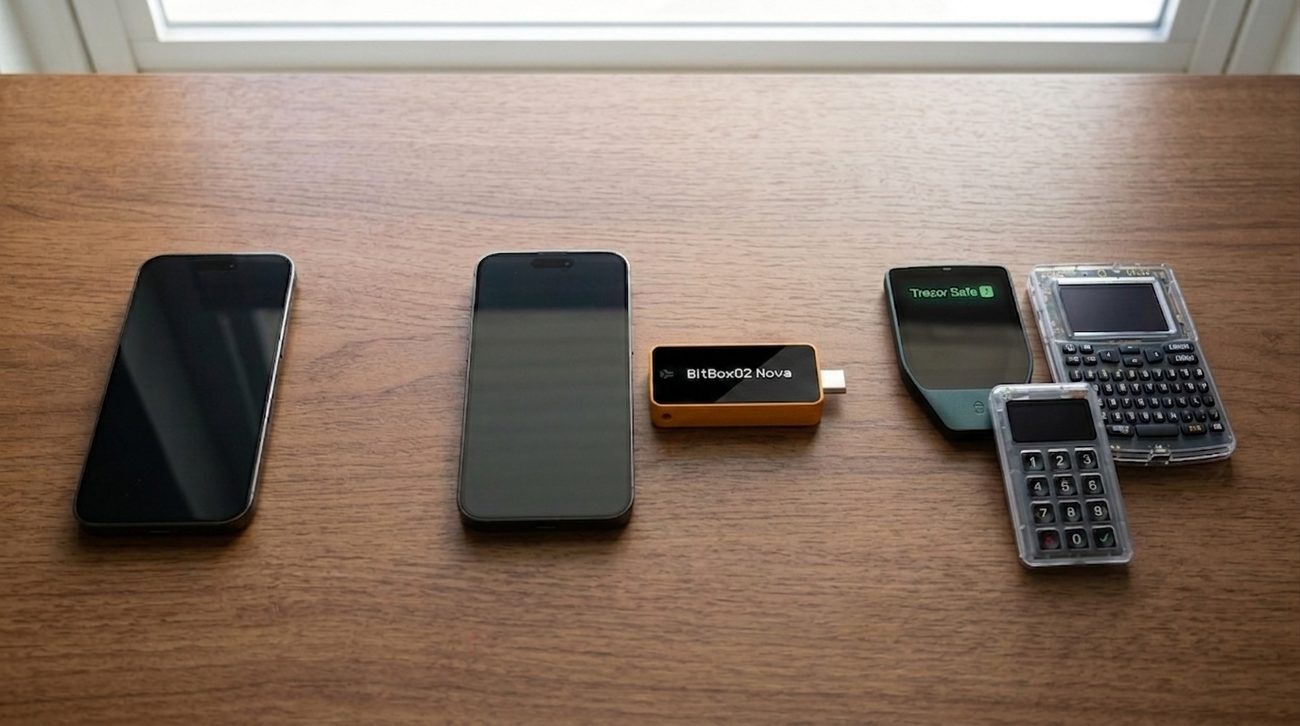
The most common mistake is looking for a single wallet that is both convenient and maximally secure. Those requirements pull in opposite directions, and the compromise usually satisfies neither.
Almost everyone is better served by two:
This is the same instinct as not carrying your life savings in your pocket. Once you separate them, most of the difficult trade-offs disappear — the spending wallet can be convenient because the stakes are low, and the savings wallet can be awkward because you barely touch it.
Answer these honestly, in order. They matter far more than any feature comparison.
Not what you hope to hold eventually — what you will actually hold in the next year. Security measures cost time and add ways to lose access, and both should be proportionate. A setup appropriate for a life-changing sum is genuine overkill for a few hundred dollars, and the extra complexity is a real risk rather than free insurance.
Name it. The realistic list for most people, roughly in order of likelihood:
Notice how many of those are not fixed by spending more on hardware. The second-most-likely item on that list is solved by discipline, not purchases.
If you were unavailable tomorrow, could anyone reach this bitcoin? For a lot of people the honest answer is no, and that is a design flaw rather than a security feature. It also argues against complexity: every layer you add is another thing someone else has to understand at the worst possible time.
Be realistic rather than aspirational. A setup you find annoying is a setup you will work around, and the workarounds are where the mistakes live. A simple arrangement you use correctly beats a sophisticated one you circumvent when you are in a hurry.
Learning, small amounts, first time off an exchange
Free, fast, and teaches addresses, fees, and backups while the stakes are low.
Holding savings you would genuinely miss
Keys stay off internet-connected machines. This remains the right setup for most people, for years.
Large amount, already comfortable, restore tested
No single key or location can lose or leak your bitcoin.
Large amount, but nobody around you could recover it
Recoverability is security. A wallet nobody else can recover has already failed.
Almost nobody should start at the third row. Multisig is the right destination for meaningful savings and the wrong starting point, because it multiplies every backup mistake by three before you have made your first one.
Once you know you want a hardware wallet, the field narrows quickly — most current devices from reputable makers are fine. These are the differences worth weighing.
Things that matter less than the marketing suggests: screen size, metal casing, price above a certain point, and the number of assets supported — which is a downside rather than a feature if you only hold bitcoin.
Compare devices Compare wallet software
Your first setup is not a permanent commitment, and treating it as one is why people stall. Self-custody is a journey takes that further, covering where you are allowed to start and how to tell you are ready to move. Because every wallet is restorable from its recovery words, moving between setups later is a normal, expected operation rather than a migration crisis.
A reasonable arc, spread over years rather than weeks:
Whatever you pick, Start Here takes it from decision to a wallet you have proven works — four steps, small amounts, and recovery tested before bitcoin arrives.